
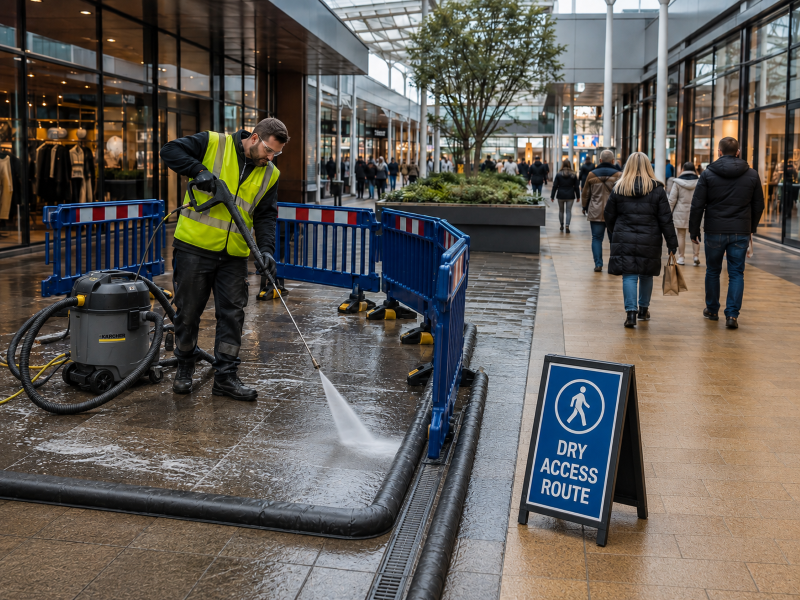
A professional commercial pressure washing company should plan how water, loosened dirt and cleaning residue will be controlled before equipment is switched on. Surface-water drains can discharge directly to the environment, so contaminated washwater should not simply be allowed to flow into the nearest gully. Government pollution-prevention guidance says contaminated water from business activities should be directed appropriately, recycled or removed rather than allowed into surface-water drainage.
Pressure washing can transform the appearance of a commercial property, but facilities managers have to consider much more than the finished surface. A busy retail park, hotel, education estate, healthcare site or commercial development may have pedestrian routes, loading areas, delivery vehicles, drainage points, neighbouring businesses and members of the public moving through the site while cleaning takes place. Water run-off adds another layer of responsibility.
This FAQ guide explains what facilities, building and estates managers should expect from a commercial pressure washing company when managing run-off, drainage, public access and operational disruption.
Commercial Pressure Washing Company Water Management Frequently Asked Questions
-
How should a commercial pressure washing company manage water run-off?A professional commercial pressure washing company should assess where washwater will travel before cleaning begins. That normally means identifying:
- Surface-water drains
- Foul drains
- Drainage channels
- Low points in paving
- Slopes
- Doorways
- Neighbouring properties
- Landscaped areas
- Vehicle routes
- Public walkways
-
Why does water run-off matter during commercial pressure washing?Professional pressure washing loosens contamination from a surface and mixes it with water. That contamination may include:
- Soil
- Algae
- Moss
- Leaf residue
- Oil
- Grease
- Vehicle deposits
- Food residue
- Paint particles
- Cleaning chemicals
- General atmospheric dirt
-
Can pressure washing water go into a surface-water drain?Contaminated washwater should not simply be discharged into a surface-water drainage system. Government guidance states that surface-water drains discharge directly to the environment and businesses must ensure contaminated water from their premises and activities is appropriately managed. This distinction is particularly important at:
- Retail parks
- Industrial estates
- Car parks
- Loading bays
- Service yards
- Hotels
- Schools and universities
- Healthcare properties
- Restaurant developments
- Public squares
-
Does pressure washing water always have to be collected?Not necessarily. The appropriate control depends on:
- What is being cleaned
- What contamination is present
- Whether chemicals are being used
- The volume of water generated
- Where the water would otherwise flow
- The site drainage system
- Local environmental requirements
-
Can washwater be discharged into a foul drain?Potentially, but facilities teams should not assume this is automatically permitted. Some commercial discharges may fall within trade-effluent controls, and consent or approval from the relevant wastewater provider may be required depending on the circumstances. Government guidance confirms that discharges of liquid effluent or wastewater can require environmental controls, while trade-effluent consent governs certain discharges from commercial premises into public sewers. Where a project may generate significant or contaminated washwater, the drainage route should be confirmed before work begins. A competent commercial pressure washing company should raise this during planning rather than leaving the question until cleaning is underway.
-
What should happen during a commercial pressure washing site survey?The site survey should examine more than the square metreage requiring cleaning. A useful survey should consider:
- Surface construction
- Type of contamination
- Drainage locations
- Surface falls
- Pedestrian footfall
- Vehicle routes
- Loading schedules
- Shop or building entrances
- Emergency exits
- Neighbouring premises
- Water availability
- Electricity
- Noise restrictions
- Operating hours
- Sensitive landscaping
- Public highways
- Potential overspray
- Wastewater management
-
How does a commercial pressure washing company identify the correct drains?Existing drainage drawings are extremely useful where available. Facilities or estates teams may be able to provide plans identifying:
- Surface-water drainage
- Foul drainage
- Combined systems
- Interceptors
- Soakaways
- Drainage channels
- Pumping systems
-
How should pedestrian access be controlled?Pressure washing introduces temporary hazards including wet surfaces, hoses and active machinery. UK guidance advises restricting access to wet or drying floors and highlights barriers or sectional cleaning as more effective controls than relying on warning signs alone. The same principle is highly relevant to external commercial pressure washing. A suitable access plan may include:
- Physical barriers
- Temporary pedestrian diversions
- Phased cleaning
- Dry access routes
- Alternative building entrances
- Marshals in busy locations
- Temporary closures
- Out-of-hours working
- Clear reopening checks
-
Are warning signs enough around pressure washing?Not always. UK guidance notes that signs and cones warn people about a wet surface but do not physically prevent access. Where people could still walk directly into an active or wet cleaning area, barriers or other access restrictions may be required. For a commercial pressure washing company, this is particularly important around:
- Shopping-centre entrances
- Hotel entrances
- Public pavements
- Hospital routes
- School entrances
- Transport facilities
- Office receptions
- Retail parks
- Pedestrianised areas
-
Can a commercial property stay open during pressure washing?Often, yes. The key is planning. A commercial pressure washing company can frequently work around an operational building by dividing the site into phases. For example:
- One entrance can remain open while another is cleaned.
- One section of paving can dry while cleaning continues elsewhere.
- Delivery yards can be cleaned between vehicle movements.
- Retail walkways can be completed before stores open.
- Hotel entrances can be scheduled around check-in and check-out periods.
- School areas can be cleaned during holidays or quieter periods.
-
Why is cleaning in sections often better for live commercial sites?Sectional cleaning allows the contractor to control both water and people more effectively. Rather than wetting a large public-facing area at once, the commercial pressure washing company can isolate a manageable zone, clean it, remove standing water and reopen it before moving forward. UK guidelines recommend sectional cleaning as one way to preserve a dry route and reduce slip exposure during cleaning. For facilities managers sectional working can also:
- Reduce disruption
- Simplify pedestrian diversions
- Maintain emergency access
- Protect tenant entrances
- Keep delivery routes operational
- Make drying easier to monitor
- Improve run-off control
-
How does a commercial pressure washing company manage slip risks?Pressure washing removes contamination that may itself contribute to slips, but the cleaning process temporarily introduces water. UK guidance states that effective cleaning is important for controlling slip risks, but also warns that cleaning itself can introduce hazards through wet surfaces and equipment. A professional commercial pressure washing company should therefore plan both sides of the risk. During the work, controls may include:
- Exclusion zones
- Barriers
- Sectional cleaning
- Water removal
- Squeegeeing
- Wet vacuum equipment
- Alternative routes
- Suitable footwear for operatives
- Hose management
- Reopening only when the surface is suitable
-
What happens if the pressure washing crosses a public footpath?The contractor must consider people outside the immediate commercial property as well as those working inside it. UK guidance on protecting the public emphasises managing site boundaries, access and measures to exclude unauthorised people from work areas. Where cleaning affects a public-facing route, the plan may require:
- Temporary pedestrian segregation
- A clearly defined alternative route
- Barriers
- Additional supervision
- Work during quieter hours
- Coordination with the property manager
- Potential liaison with the relevant authority where public land is affected
-
How should hoses be managed on busy sites?Hoses can become trip hazards and can interfere with doors, vehicle routes and emergency access. The commercial pressure washing company should plan hose routing before the work begins. Potential controls include:
- Keeping hoses within the work zone
- Crossing pedestrian routes only where unavoidable
- Using suitable hose ramps
- Avoiding emergency exits
- Keeping fire routes clear
- Routing supplies along building edges
- Regularly checking for movement or tangling
- Removing unnecessary hose lengths
-
How should vehicle movements be managed?Commercial pressure washing frequently takes place around:
- Loading bays
- Car parks
- Service roads
- Delivery areas
- Hotel forecourts
- Retail parks
- Waste compounds
- Delivery schedules
- Known peak periods
- Restricted routes
- Loading-bay booking information
- Emergency access requirements
- Contractor parking arrangements
-
Can loading bays be pressure washed while a warehouse remains operational?Potentially, yes. Cleaning can often be phased between delivery windows. The method may involve:
- Closing one bay at a time
- Diverting deliveries temporarily
- Cleaning overnight
- Removing standing water before reopening
- Using barriers to separate workers and vehicles
- Coordinating with warehouse management
- Checking drainage channels before work begins
-
How should oil or grease contamination be handled?Oil and grease require greater care than ordinary atmospheric dirt. Pressure washing can mobilise contamination and spread it across a larger area if it is not contained. Before cleaning, the contractor should identify:
- The extent of contamination
- Nearby drains
- Whether an interceptor is present
- The type of cleaning product required
- How washwater will be recovered
- Whether specialist waste disposal is needed
-
What about cleaning chemicals?Cleaning chemicals can change the environmental and safety requirements of the job. Where detergents, degreasers or specialist treatments are required, the contractor should consider:
- Product suitability
- COSHH information
- Dilution
- Application method
- Dwell time
- Overspray
- Run-off
- Drainage
- Wastewater collection
- Nearby vegetation
- Public exposure
-
Can commercial pressure washing damage drainage systems?Aggressive cleaning can move substantial amounts of grit, moss, silt and debris towards gullies. If that material enters the drainage system, it may contribute to blockages or overwhelm small channels. The commercial pressure washing company should therefore remove heavier debris before washing where appropriate. This may involve:
- Sweeping
- Scraping moss
- Clearing leaves
- Removing litter
- Emptying accumulated silt
- Protecting drain grates
- Collecting loosened debris during cleaning
-
Should drains be inspected before work starts?On larger or heavily contaminated sites, this can be valuable. A blocked drainage channel can cause washwater to spread unexpectedly towards entrances, roads or neighbouring property. Before commercial pressure washing, facilities teams should consider whether there are known issues with:
- Blocked gullies
- Damaged channels
- Standing water
- Poor falls
- Flood-prone areas
- Broken drain covers
- Blocked interceptors
- Previous drainage complaints
-
How can water use be controlled?Professional pressure washing is not simply about maximising water flow. The cleaning method should balance:
- Pressure
- Water volume
- Nozzle type
- Cleaning speed
- Surface condition
- Contaminant type
- Recovery requirements
-
Should pressure washing be completed during heavy rain?Usually, facilities managers should consider whether the weather will prevent effective run-off control. Heavy rainfall can:
- Increase drainage volumes
- Spread loosened contamination
- Dilute cleaning products
- Reduce visibility
- Increase slip risks
- Carry debris beyond the work zone
- Make drying difficult
-
Can pressure washing be completed overnight?Yes, and this can be advantageous for high-footfall sites. Overnight commercial pressure washing can reduce interaction with:
- Customers
- Staff
- Deliveries
- Visitors
- Students
- Residents
- Vehicles
-
How does pressure washing work around hotel and restaurant entrances?Hospitality properties need to protect both appearance and guest access. The commercial pressure washing company may schedule works:
- After restaurant closure
- Before breakfast service
- Between check-out and check-in periods
- One entrance at a time
- During lower occupancy
-
How should retail parks manage commercial pressure washing?Retail parks often combine high pedestrian footfall with significant vehicle activity. A site plan may divide the estate into:
- Shopfront zones
- Pedestrian walkways
- Crossings
- Service roads
- Loading areas
- Bin stores
- Car parks
- Landscaped boundaries
-
Can pressure washing be coordinated across multiple sites?Yes. Facilities and estates teams managing property portfolios may benefit from a planned programme rather than arranging reactive cleaning independently at each site. A multi-site programme can establish:
- Standard survey information
- Site-specific drainage plans
- Priority areas
- Approved working methods
- Preferred cleaning windows
- Reporting requirements
- Photographic evidence
- Escalation procedures
-
What documentation should facilities managers expect?The level of documentation should reflect the project. Depending on the site, this may include:
- Site survey
- Risk assessment
- Method statement
- COSHH assessments where applicable
- Surface assessment
- Drainage observations
- Access plan
- Before photographs
- After photographs
- Areas completed
- Limitations
- Defects identified
- Recommendations
- Waste-management information where relevant
-
Can pressure washing uncover maintenance defects?Yes. Once algae, dirt and surface deposits are removed, facilities teams may discover:
- Cracked paving
- Failed pointing
- Loose blocks
- Damaged concrete
- Surface erosion
- Blocked drainage channels
- Failed sealants
- Subsidence
- Water pooling
- Broken covers
-
How does a commercial pressure washing company protect building entrances?Entrances require careful management because they combine pedestrian traffic with thresholds, mats, doors and internal flooring. Water should not be allowed to migrate into the building. Controls may include:
- Cleaning away from the doorway
- Temporary barriers
- Absorbent protection
- Wet vacuum recovery
- Squeegeeing
- Closing one entrance temporarily
- Maintaining an alternative entrance
- Checking internal floors
-
Can pressure washing improve public-facing areas without disrupting users?Yes, when the programme is designed around the site. Public-facing environments benefit from cleaner:
- Paths
- Entrances
- Paving
- Courtyards
- Service areas
- Walls
- Bin stores
- Loading zones
-
Is pressure washing suitable for every surface?No. A professional commercial pressure washing company should assess the surface before selecting the cleaning method. High pressure may not be appropriate for:
- Delicate masonry
- Weak pointing
- Historic surfaces
- Damaged tarmac
- Certain coatings
- Soft stone
- Decorative finishes
-
What should I ask a commercial pressure washing company?Before work begins, useful questions include:
- How will the site drainage be assessed?
- Where will washwater go?
- How will contaminated run-off be controlled?
- Will chemicals be used?
- How will drains be protected?
- How will pedestrian routes remain safe?
- Will barriers be used?
- Can the work be phased?
- Can cleaning take place outside operating hours?
- How will hoses be managed?
- What happens if heavy rain is forecast?
- What reporting will be provided?
- Can other services be combined during the visit?
-
Can other exterior cleaning services be combined with pressure washing?Yes. A planned visit may include:
- Commercial pressure washing
- Graffiti removal
- DOFF cleaning
- High-level cleaning
- Entrance cleaning
- Wall cleaning
- Service-yard cleaning
- Bin-store cleaning
-
Why choose Deep Clean 24 Seven as your commercial pressure washing company?Deep Clean 24 Seven provides specialist commercial cleaning services across the UK. Our services include:
- Commercial pressure washing
- Professional pressure cleaning
- Graffiti removal
- DOFF cleaning
- Commercial kitchen deep cleaning
- High-level cleaning
- Customer service
- Site-specific planning
- Cost-effective cleaning
- Flexible scheduling
- Safe public access
- Professional operatives
- UK-wide coverage
- 24/7 operational support
- Free expert site surveys
Arrange a free survey with a commercial pressure washing company
The most effective commercial pressure washing company should consider where the water goes just as carefully as how the surface is cleaned.
A free site survey from Deep Clean 24 Seven can help establish:
- Which surfaces require cleaning
- The condition of the substrate
- Where drainage points are located
- How run-off should be managed
- Which pedestrian routes need protection
- Whether work should be phased
- Which operating periods should be avoided
- Whether graffiti removal or DOFF cleaning should be incorporated
📞 Call our Operations Team to discuss your requirements: 0203 640 8247
📧 Email: info@24sevengroup.co.uk
Follow these useful website links to find out more about the services we offer: Kitchen Deep Cleaning; Pressure Washing; DOFF Cleaning, Graffiti Removal. Follow us on Instagram, Facebook and Linked In.