
Quick answer
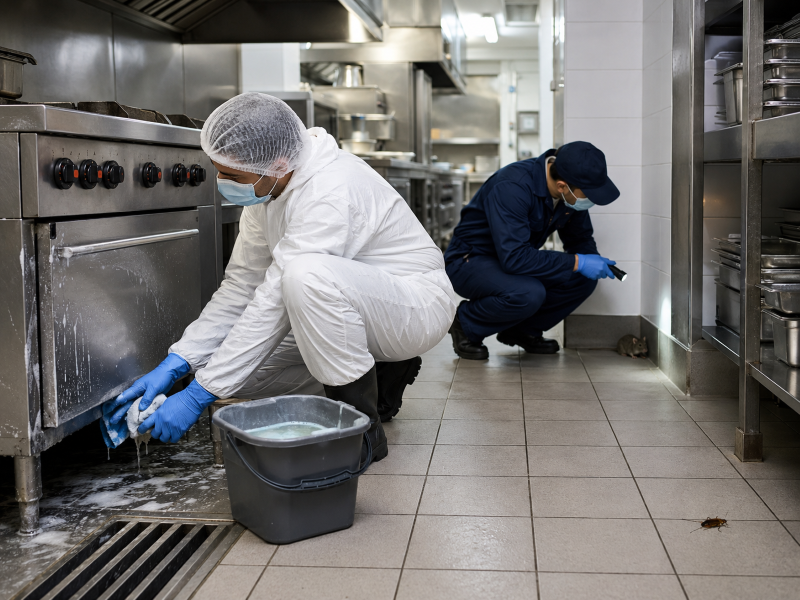
Restaurant kitchen deep cleaning should be coordinated with pest-control measures because pests are often attracted by food debris, grease, moisture, waste residue and hidden contamination. A professional deep clean helps remove the conditions that encourage pest activity, while pest-control measures help monitor, treat and prevent future infestations. The most effective approach is to clean first, treat or inspect afterwards, then maintain a routine schedule that reduces the chance of pests returning.
Why restaurant kitchen deep cleaning and pest control should work together
Pest control and cleaning are often treated as separate services, but in a commercial kitchen they are closely connected.
A pest-control contractor can identify activity, monitor risk and apply appropriate treatment. However, if the kitchen still contains grease build-up, food debris, dirty floor edges, contaminated equipment bases or waste residue, the conditions attracting pests may remain.
This is why restaurant kitchen deep cleaning plays such an important role in long-term pest prevention.
Restaurants, cafés, hotels, bars and food-led venues operate under pressure. Service periods are busy, equipment is hard to move, and daily cleaning teams often focus on visible surfaces. Over time, hidden contamination can build up in areas that pests exploit.
Common risk areas include:
- Behind cooking equipment
- Beneath preparation counters
- Around fridge and freezer seals
- Under sinks and wash-up areas
- Around floor-wall junctions
- Inside floor channels and drains
- Near bin stores and waste routes
- Around dry goods storage
- Behind shelving and racking
- Around extraction canopies and grease-prone surfaces
For restaurant owners, general managers, facilities teams and head chefs, the priority is clear: remove the source, reduce the risk and keep the kitchen ready for inspection.
How restaurant kitchen deep cleaning helps reduce pest activity
Pests are rarely attracted to a clean, dry and well-maintained environment. They are usually drawn to food sources, shelter, warmth, water and accessible harbourage points.
A structured restaurant kitchen deep cleaning programme helps reduce these triggers by removing the residues and build-up that routine cleaning may miss.
This can help address:
- Grease deposits
- Food debris
- Stagnant moisture
- Organic residue
- Spillages beneath equipment
- Contamination around drains
- Dust and crumbs in dry stores
- Waste residue near bin areas
- Sticky floor edges
- Build-up behind heavy appliances
When deep cleaning and pest control are planned together, the pest-control provider can inspect a cleaner environment, identify genuine harbourage points more clearly and recommend targeted preventative action.
How to coordinate restaurant kitchen deep cleaning with pest-control measures
1 Start with a joint risk review
Before scheduling work, restaurant managers should review both cleaning and pest-control concerns.
This should include:
- Recent pest sightings
- Previous pest-control reports
- High-risk kitchen zones
- Waste handling areas
- Food storage conditions
- Water sources and leaks
- Drainage concerns
- Equipment that cannot be moved easily
- Cleaning gaps identified by staff
- Areas noted during EHO or internal audits
A restaurant kitchen deep cleaning plan should focus on the areas most likely to contribute to pest activity. This makes the clean more targeted and improves the value of any follow-up pest inspection.
The aim is not simply to make the kitchen look cleaner. The aim is to remove the conditions that support pest survival.
2 Schedule the deep clean before pest-control treatment where possible
In many cases, restaurant kitchen deep cleaning should take place before a pest-control treatment or inspection.
Cleaning first helps remove food debris, grease and organic matter that may attract pests. It also allows pest-control technicians to inspect the building more accurately because hidden areas become easier to see.
This is particularly useful around:
- Cooklines
- Preparation zones
- Dishwash areas
- Storage rooms
- Drains
- Equipment bases
- Wall-floor junctions
- Bin stores
- Staff food areas
- Back-of-house corridors
If pest treatment takes place before cleaning, there is a risk that the cleaning process may disturb monitoring points, wash away evidence or interfere with placed control measures. The correct order should always be agreed with the pest-control provider, especially where active treatment is already in place.
3 Move equipment to expose hidden contamination
One of the biggest advantages of professional restaurant kitchen deep cleaning is the ability to access areas that daily cleaning cannot reach properly.
Heavy appliances, refrigeration units, preparation benches and storage racks often conceal food debris, grease and moisture. These hidden areas can attract rodents, flies, cockroaches and other pests.
A professional deep clean may involve cleaning:
- Behind ovens and fryers
- Beneath cooking ranges
- Under refrigeration units
- Behind dishwashers
- Around pipework
- Beneath shelving
- Behind dry store racking
- Around skirting and kickboards
- Inside hard-to-reach floor edges
- Near service penetrations
This level of cleaning is difficult to achieve during normal operating hours. It often needs planned downtime, out-of-hours attendance or overnight scheduling.
By exposing and cleaning these hidden areas, restaurants can remove both visible and invisible pest attractants.
4 Focus on grease, drains and moisture control
Grease and moisture are major risk factors in restaurant environments.
Food residue mixed with moisture can create odours, bacterial growth and pest attraction. Drains, floor channels, sink areas and wash-up zones often become high-risk areas if they are not cleaned thoroughly.
A restaurant kitchen deep cleaning schedule should include particular attention to:
- Drain edges
- Floor channels
- Sink surrounds
- Wash-up areas
- Dishwasher bases
- Grease-prone floor zones
- Fryer surrounds
- Splashback areas
- Waste water points
- Leaking or damp areas
Cleaning these areas supports both hygiene and pest prevention. It also helps identify underlying maintenance issues, such as leaking pipework, damaged seals or poor drainage, which may need further attention.
Pest control is more effective when the kitchen is not providing pests with food, water and shelter.
5 Clean storage areas as part of the pest-control plan
Dry stores, ambient storage rooms and back-of-house stock areas can be overlooked during kitchen cleaning. However, they are often central to pest prevention.
Pests may be attracted by damaged packaging, spilled ingredients, crumbs, flour dust, cardboard, warm storage rooms and cluttered shelving.
A coordinated restaurant kitchen deep cleaning programme should include:
- Cleaning beneath racking
- Removing spilled dry goods
- Checking packaging damage
- Cleaning corners and floor edges
- Reducing clutter
- Cleaning staff food storage areas
- Inspecting behind shelving
- Reviewing stock rotation
- Identifying possible entry points
- Supporting clearer pest monitoring access
This gives the pest-control provider a cleaner, more organised environment to inspect and helps restaurant teams maintain better standards between visits.
6 Protect the kitchen extraction and grease-prone areas
Grease build-up does not only affect surfaces. It can collect around canopy edges, filters, fan housings and nearby walls, especially in busy cooking environments.
A complete restaurant kitchen deep cleaning plan should consider visible extraction areas and surrounding grease-prone surfaces. Where specialist kitchen extract cleaning is required, this should be handled by a suitably trained contractor.
Grease can contribute to:
- Odour issues
- Surface contamination
- Fire risk concerns
- Pest attraction
- Poor hygiene standards
- Difficult daily cleaning
A kitchen may look clean at eye level while still hiding grease in hard-to-reach places. That is why restaurant managers should coordinate surface deep cleaning, extraction hygiene and pest-control monitoring as part of a wider kitchen maintenance strategy.
7 Agree what happens after the deep clean
The work should not end when the deep clean is complete.
After restaurant kitchen deep cleaning, the pest-control provider should be able to inspect the kitchen more effectively and identify whether further action is needed.
Post-clean actions may include:
- Reviewing pest monitoring points
- Checking signs of activity
- Identifying entry points
- Recommending proofing works
- Reviewing waste handling
- Checking drains and floor gaps
- Advising on storage improvements
- Updating the pest-control plan
- Setting a cleaning frequency
- Creating a follow-up inspection schedule
A clean kitchen gives managers a clearer baseline. If pest activity continues after the food sources and contamination have been removed, the next stage may involve structural proofing, drainage investigations or targeted pest-control measures.
How often should restaurant kitchen deep cleaning be scheduled?
The right frequency depends on the size of the kitchen, cooking volume, operating hours, menu type and historic pest activity.
High-output kitchens may need more frequent restaurant kitchen deep cleaning than smaller venues. Sites with heavy frying, late-night service, outdoor dining, high waste volume or previous pest issues should review their cleaning schedule carefully.
A practical programme may include:
- Monthly high-risk area cleaning
- Quarterly kitchen deep cleaning
- Six-monthly full kitchen deep cleans
- Reactive cleaning after pest activity
- Pre-inspection deep cleaning
- Seasonal cleaning before peak trading periods
- Targeted drain and wash-up area cleaning
- Routine back-of-house hygiene reviews
The best schedule is one that supports both food hygiene and pest prevention. Waiting until pest activity is visible can lead to higher costs, greater disruption and increased reputational risk.
Why professional restaurant kitchen deep cleaning is different from daily cleaning
Daily cleaning is essential, but it is not the same as professional kitchen deep cleaning.
Daily cleaning usually focuses on:
- Worktops
- Floors
- Sinks
- Visible equipment
- Food preparation surfaces
- Service cleaning
- End-of-shift hygiene tasks
Professional restaurant kitchen deep cleaning goes further by targeting areas that are difficult to access, heavily soiled or more likely to contribute to long-term hygiene risks.
This can include:
- Moving equipment where possible
- Degreasing hidden areas
- Cleaning beneath appliances
- Treating floor edges and corners
- Cleaning behind shelving
- Addressing wash-up and drain zones
- Removing stubborn grease and residue
- Providing before and after evidence
- Supporting audit readiness
This specialist work helps restaurants maintain a stronger standard across the whole kitchen, not just the visible parts.
Common questions
Why should restaurant kitchen deep cleaning be coordinated with pest control?
Restaurant kitchen deep cleaning removes grease, food debris, moisture and hidden contamination that can attract pests. Pest control is more effective when the kitchen environment no longer supports pest activity.
Should deep cleaning happen before or after pest-control treatment?
In many cases, deep cleaning should happen before pest-control inspection or treatment. However, if an active treatment programme is already in place, the cleaning schedule should be agreed with the pest-control provider to avoid disturbing control measures.
What areas should be cleaned to reduce pest risks?
High-risk areas include beneath equipment, behind appliances, around drains, near waste areas, in dry stores, around floor edges, under shelving and near moisture sources.
Can restaurant kitchen deep cleaning stop pests completely?
Deep cleaning can reduce the conditions that attract pests, but it should be combined with professional pest control, proofing, monitoring and good daily hygiene practices for the strongest results.
How often should a restaurant kitchen be deep cleaned?
The frequency depends on cooking volume, operating hours, grease levels, previous pest activity and site risk. Busy commercial kitchens may need scheduled deep cleaning throughout the year rather than a one-off clean.
Does restaurant kitchen deep cleaning help with inspections?
Yes. Restaurant kitchen deep cleaning can help improve hygiene standards, reduce hidden contamination and support better preparation for internal audits, food hygiene inspections and pest-control reviews.
When to call Deep Clean 24 Seven
If your restaurant, hotel, café, bar or commercial kitchen needs a structured deep cleaning programme to support pest-control measures, Deep Clean 24 Seven can help.
Our restaurant kitchen deep cleaning services are designed to support busy hospitality environments where hygiene, safety, presentation and operational continuity matter.
Our services can support:
- Restaurant kitchen deep cleaning
- Commercial kitchen deep cleaning
- Degreasing of cooking areas
- Cleaning behind and beneath equipment
- Wash-up area deep cleaning
- Drain and floor edge cleaning
- Dry store cleaning support
- Back-of-house hygiene cleaning
- Pre-inspection cleaning
- Out-of-hours and overnight cleaning
- Before and after photographic evidence
- Coordinated cleaning schedules around pest-control activity
A cleaner kitchen makes pest-control measures more effective and helps reduce the risk of recurring hygiene problems.
Need to coordinate restaurant kitchen deep cleaning with pest-control measures? Deep Clean 24 Seven is part of the 24 Seven Companies Ltd group, alongside our affiliated specialist pest control company, Pest Control 24 Seven. This means clients can benefit from a more coordinated approach to restaurant kitchen deep cleaning and pest-control planning, helping remove food debris, grease and hidden contamination while supporting targeted pest prevention advice where required.
Speak to the Deep Clean 24 Seven operations team for expert guidance or to arrange a professional kitchen deep clean alongside pest control support where required.
📞 Call to discuss your requirements: 0203 640 8247
📧 Email: info@24sevengroup.co.uk
Follow these useful website links to find out more about the services we offer: Kitchen Deep Cleaning; Pressure Washing; DOFF Cleaning, Graffiti Removal.
Follow us on Instagram, Facebook and Linked In.